top of page

FEATURED ARTICLE
Stop Managing Sensitivity. Start Using It.
PERSONAL DEVELOPMENT
August 10, 2026 at 3:29:14 PM
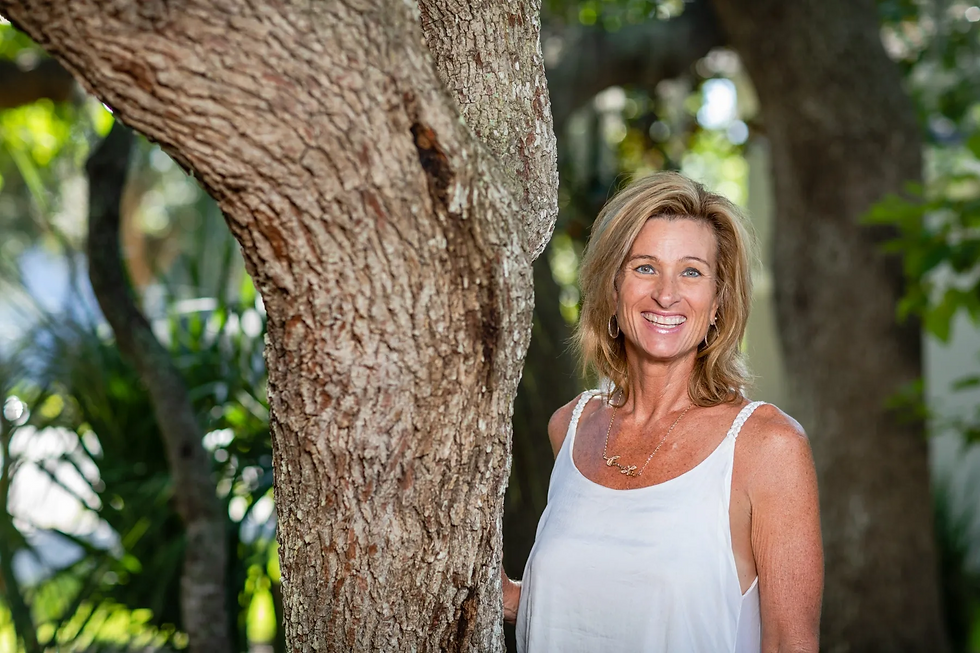


Thanks for taking the time out of your busy schedule to sit with us today. Before we dive into the details of your business and your industry, we'd love for our readers to get to know the person behind the work. Can you tell us a little about yourself, your role, and the organization you represent?
I'd probably laugh a little first, because that question used to trip me up. For twenty five years I was the person who ran IT projects. Timelines, budgets, systems that had to work. I was good at it. But if I'm being honest, I never really loved technology. I did it for the money. What I loved was the people. Even in the middle of a project plan, I was always more drawn to the humans on the team than the software we were building. That's just always been true about me. I put people first, every time, even when my job title said otherwise.
So today, if you asked me over coffee, I'd tell you I'm a speaker and coach, and the founder of Consciously Aware. I get on stages and in rooms with people and talk about the patterns running underneath stress, relationships, and the choices we make without ever realizing we're making them. Not so people can fix themselves. So they can finally see that the sensitivity they've been apologizing for their whole life is actually intelligence.
I'm a Navy veteran, I hold a PhD in Organizational Leadership, and I've spent years in mental health counseling and somatic healing training, but honestly none of that is the real answer to your question either. The real answer is simpler and harder to say out loud. I spent decades collecting other people's pain and calling it empathy, until it nearly broke me. Now I stand in front of rooms and sit across from clients and help people put down what was never theirs to carry in the first place, before it breaks them too.
Businesses rarely appear overnight, and behind every organization is usually a problem that needed solving or an opportunity that couldn't be ignored. What was happening in your world when this business first came to life, and what motivated you to pursue it?
I woke up on a hospital floor, screaming. I was screaming about an assault that had happened twenty nine years earlier. The doctor wrote in his notes that I was screaming nonsense about being raped.
It wasn't nonsense. I knew that, even flat on that floor, even in the middle of it. My body had been carrying something for twenty nine years, sealed away, managed, outrun, and it finally broke through all at once, decades later, in a place that had no idea what to do with me except write it down as confusion.
Up until that moment, I was still in technology. Twenty five years into a career I was good at but never loved. I already had a handful of credentials chasing the same thread underneath it all, mental health, human behavior, understanding people. I just hadn't admitted yet that the thread was actually the whole map.
After that floor, there was no more tossing and turning about leaving technology behind. It became a no brainer. I went back to school. I built the credentials that actually mattered. I moved into coaching, into somatic work, into everything I now do at Consciously Aware.
And I kept thinking about one question that has never really left me. How many people are sitting in psych wards right now, in the middle of a transpersonal crisis, being written up as confused, when what's actually happening is their body finally telling the truth. That question is still underneath everything I build.
What is it about your organization, culture, process, or philosophy that you believe people experience differently when they work with you compared to others in the industry?
A client sat across from me a few months into our work together and said something I think about constantly. She said, "I've been in therapy for six years. I can explain my patterns to you perfectly. I just can't seem to stop living inside of them."
That's the moment that tells me everything about what we do differently here. Most of the people who find me have already done the work everyone tells you to do. They've read the books. They've sat in the chair. They can narrate their own psychology back to you with total accuracy. And they're still stuck, because insight was never actually their problem. Knowing why you do something and being able to stop doing it live in two completely different parts of you, the mind and the body, and most approaches only ever talk to one of them.
So we don't start with more insight. We start with the body, the nervous system, the place where the pattern is actually being held and replayed, often completely outside of conscious awareness. It's slower than handing someone another framework. I keep my group work capped at five people at a time because this isn't something that scales in a room of fifty. It happens in a room where someone can actually be seen, in real time, in their body, not just in their story.
That client, six years into therapy and still stuck, was in tears within our first two sessions, not because we found something new to talk about, but because for the first time something actually moved. That's the difference. Not more understanding. Actual movement.
If you could wave a magic wand and instantly educate the public about one thing related to your business or industry, what would you want people to understand better?
I would want people to understand that what gets called a breakdown is very often a breakthrough that nobody around the person knew how to recognize.
In the mental health field, there's a term for what happened to me on that hospital floor. It's called a spiritual emergency, or a transpersonal crisis, a moment when something buried, often trauma, often something the body has been holding for years, finally surfaces all at once. It can look exactly like a psychotic episode from the outside. Screaming, disorientation, total loss of composure. And because most clinical training doesn't include language for it, it usually gets treated as one. Medicated. Documented as confusion. Sent home with a diagnosis instead of a question.
I was one of the fortunate ones. I already had the education and the resources to eventually understand what had actually happened to me. Most people in that moment don't. They get handed a label instead of an explanation, and that label follows them out of the hospital and into every doctor's office, every job application, every relationship after that, while the actual truth their body was trying to tell them never gets addressed at all.
If I could educate the public about one thing, it would be that. Before you assume someone is falling apart, consider that they might be waking up. The two can look identical from the outside. Only one of them needs medication. The other one needs someone who knows how to sit with them long enough to listen to what's actually surfacing.
Photography by:
The pace of change seems to accelerate every year. What excites you most about the future of your industry, and where do you see the biggest opportunities emerging?
What excites me most is that the language is finally catching up to what people have been feeling for years. A decade ago, if you told someone you absorbed other people's emotions, or that your body held onto something your mind had long since buried, you'd get a polite nod and a change of subject. Now there's real research behind the nervous system, real understanding of somatic memory, real recognition that trauma lives in the body and not just in the story we tell about it. The field is catching up to what sensitive people have known about themselves their whole lives without ever having the words for it.
I also think we're at the very beginning of a much bigger shift, away from mental health being treated as something broken that needs fixing, and toward it being understood as information. Anxiety, hypervigilance, even the kind of crisis I went through on that hospital floor, these are not malfunctions. They're data. They're the body trying to communicate something urgent through the only language it has left when it's been ignored for too long. The biggest opportunity I see in this industry over the next several years is building the systems, the training, and the language to actually receive that data instead of medicating it into silence.
That's what I'm building toward with Consciously Aware, and it's why Empathy Unraveled exists. Not to add one more voice explaining what's wrong with sensitive people, but to help build the world where being highly attuned is finally understood as an asset instead of a liability. I think we're closer to that than people realize. I intend to help pull it closer still.
If you could challenge one commonly accepted idea within your industry, what would it be, and why do you believe the conversation needs to evolve?
I would challenge the idea that healing is supposed to be comfortable.
So much of this industry sells calm. Peace. Five easy steps to feeling better. And I understand why, comfort sells, and nobody wants to be told the truth is going to cost them something. But comfort was never what actually changed me, and in seventeen plus years of doing this work, I have never once seen it be what actually changes anyone else either. What changes people is being willing to feel the thing they have spent years, sometimes decades, avoiding feeling. That is not comfortable. It is often the opposite of comfortable. But it is the only door that actually leads anywhere.
I watch this industry sell people bypass dressed up as healing constantly. Positive affirmations instead of grief work. Gratitude journaling instead of actually addressing the rage underneath it. Meditation apps instead of ever letting the nervous system fully feel what it has been braced against for years. None of that is wrong exactly, it just is not enough on its own, and marketing it as the whole answer sets people up to feel broken all over again when it does not work.
I built my work around the opposite premise. Go toward the thing, not around it. Feel the pattern instead of managing it from a safe distance. Let the body do what it has been trying to do the entire time, which is finish what it started and never got to complete. That is not a comfortable pitch. It has never made my marketing easier. But it is honest, and I would rather be honest and effective than easy and popular.
If you had the opportunity to go back and speak with yourself on day one of your journey, what advice would you offer your younger self?
I would find her still sitting in that IT job, good at it, successful by every measure that was supposed to matter, and quietly exhausted in a way she couldn't explain yet. And I would tell her, you are not too sensitive. You are collecting. There is a difference, and one day you are going to understand exactly what that means, but you don't have to wait for a hospital floor to learn it.
I would tell her the credentials are going to matter, keep chasing them, but not for the reason she thinks. She's collecting them because she believes she needs permission to trust what she already knows about people. She doesn't. The letters after her name will eventually just become proof of what her body already understood decades before her mind caught up.
And I would tell her the breaking point that's coming, and it is coming, is not the end of her story. It's the actual beginning of it. Everything before it was preparation she didn't know she was doing. Every project she ran, every person she quietly took care of instead of the system she was supposed to be building, every year she put people first when her job title said otherwise, none of that was wasted. It was training for the only project that was ever actually going to matter.
I would tell her one more thing. The sensitivity she's been trying to manage her whole life, the thing she thinks is her biggest problem, is going to become the entire foundation of her life's work. What she views as weakness is a superpower ... She just has to hold on long enough to find out.
Well, this has been a blast. Thank you so much for taking the time to sit with us today and for allowing our readers to get to know both you and your business a little better. As a final question, where can people learn more, stay connected, and follow everything you and your organization are working on in the months ahead?
This has genuinely been a joy. Thank you for making space for the real version of this story instead of the polished summary.
If anything in this conversation felt familiar, if you've spent your life being told you feel too much, or you've quietly collected other people's pain and called it being a good friend, a good partner, a good employee, I want to hear from you. That conversation is exactly what I love having on stage and in the room with clients, and it's where I'm spending most of my energy right now. If you're an event organizer, a conference planner, or you lead a team that needs this conversation in the room, I'd love to talk about bringing this work to your audience.
You can find me and everything I'm building at consciouslyaware.com. That's where you'll find speaking inquiries, one-on-one coaching, the AWARE Method, along with energy healing and where a lot of these conversations continue every single month. If you'd rather talk first, consciouslyaware.com/lets-connect will get you on my calendar directly. My book, Empathy Unraveled, just launched as well, and it's a good place to start if you want the full story before we ever meet in person.
And if you're an empath, a highly sensitive person, or you love someone who is, come find me. I promise you, you are not too much. You never were.

© 2026 Joseph Haecker, LLC dba AmpLever | All rights reserved.

bottom of page